Alterazioni del trauma bellico nella contemporaneità dall’Europa al Giappone

Authors

Fabrizio Impellizzeri
University of Catania
Luca Capponcelli
University of Catania
Martina Guccione
University of Catania

Keywords:

Prima e Seconda Guerra Mondiale, Europa, Giappone, traumi bellici, fantasmagoria, trasfigurazione della realtà

Synopsis

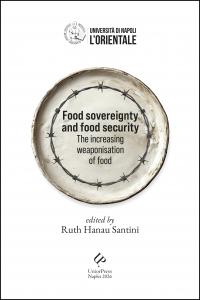
UniorPress2.jpg

Publisher: UniorPress

Series: Argos. Studies in Argumentation, Pragmatics and Stylistics

Pages: 302

Language: English

Abstract: While on the one hand literature strongly feels the need for a historiographical and authentic account of the experience of war, on the other there is a need for an altered narrative of reality that reveals the fragility, fears and, above all, the psychological strategies linked to the instinct for survival from trauma. Between Italy, France and Japan, the various authors tackle the frightening theme of war, between the unspeakable and the unshowable, in an attempt to (re)construct an altered reality capable of evoking, on the one hand, the surreal exaltation of conflict or, on the other, transfiguring horror through the power of phantasmagorical illusion. The alteration of war trauma in contemporary Western and Japanese literature concerns the different narrative and figurative expressions relating to the First and Second World Wars, as far as Europe is concerned, and the consequences of the Pacific conflict as far as Japan is concerned, and focuses mainly on the transfigured reaction of a necessary dissociation from traumatic reality, which is reconfigured in the works discussed here in its most diverse and salvific phantasmagorical manipulation.

Downloads

Download data is not yet available.

Author Biographies

Fabrizio Impellizzeri, University of Catania

FABRIZIO IMPELLIZZERI is a full professor of French Literature at the University of Catania. He mainly deals with rewritings of the self, auto-sociobiography, banlieuepoétique, post-migration, fin de siècle industrial literature, dandyism, the study of erotic sublimation, intersemiotics and cine-literature. His publications cover the period from the 19th to the 21st century and deal with authors such as Genet, Klossowski, Tinan, Sachs, Jouve, Colette, Willy, Batista, Benchetrit, Ulonati and Téchiné. He is the founder and director of the Visages Interuniversity Research Centre, which studies variations and hybridisms in autobiographical writing in French-language literature.

Luca Capponcelli, University of Catania

LUCA CAPPONCELLI is an associate professor of Japanese language and literature at the University of Catania. He studies modern and postmodern Japanese poetry and fiction, with a focus on the psychological and physical disarticulation of the self, explored through the themes of illness, metamorphosis, doppelgängers and cyborg identity. His research includes the early 20th century and the post-war period, with particular reference to literary modernism and Japanese dystopian imagery. His most recent publications deal with the poets Yosano Akiko, Hagiwara Sakutarō and Ishikawa Takuboku, the modernism of Kajii Motojirō and Satō Haruo, and the science-fiction of Numa Shōzō.

Martina Guccione, University of Catania

MARTINA GUCCIONE is a PhD student in French Literature at the University of Catania. Her research interests focus on autobiographical works produced by Italian immigrants in France between the 19th and 21st centuries. She also studies rewritings of the self in contemporary French literature and issues of identity and translingualism in the French-speaking Mediterranean area. She has published several articles on Édouard Louis and the French-speaking writer Cécile Oumhani. She is also a collaborating member of the Visages Interuniversity Research Centre, which studies variations and hybridism in autobiographical writing in French-language literature.

Downloads

Published

January 22, 2026

License

Creative Commons License

This work is licensed under a Creative Commons Attribution 4.0 International License.

Details about this monograph

ISBN-13 (15)

978-88-6719-337-0

Publication date (01)

2026-01-22

doi

10.6093/978-88-6719-337-0